How Chemist Warehouse Cut Shelf Gaps by 30% in a Month With a Wearable AI Badge
Chemist Warehouse gave store associates a small camera badge worn on a lanyard. As staff walk the aisles doing their normal jobs, it scans the shelves hundreds of times a day and tells them what to restock. Inventory gaps fell 30% in the first month, and the rollout is heading for 550+ stores.
The starting point
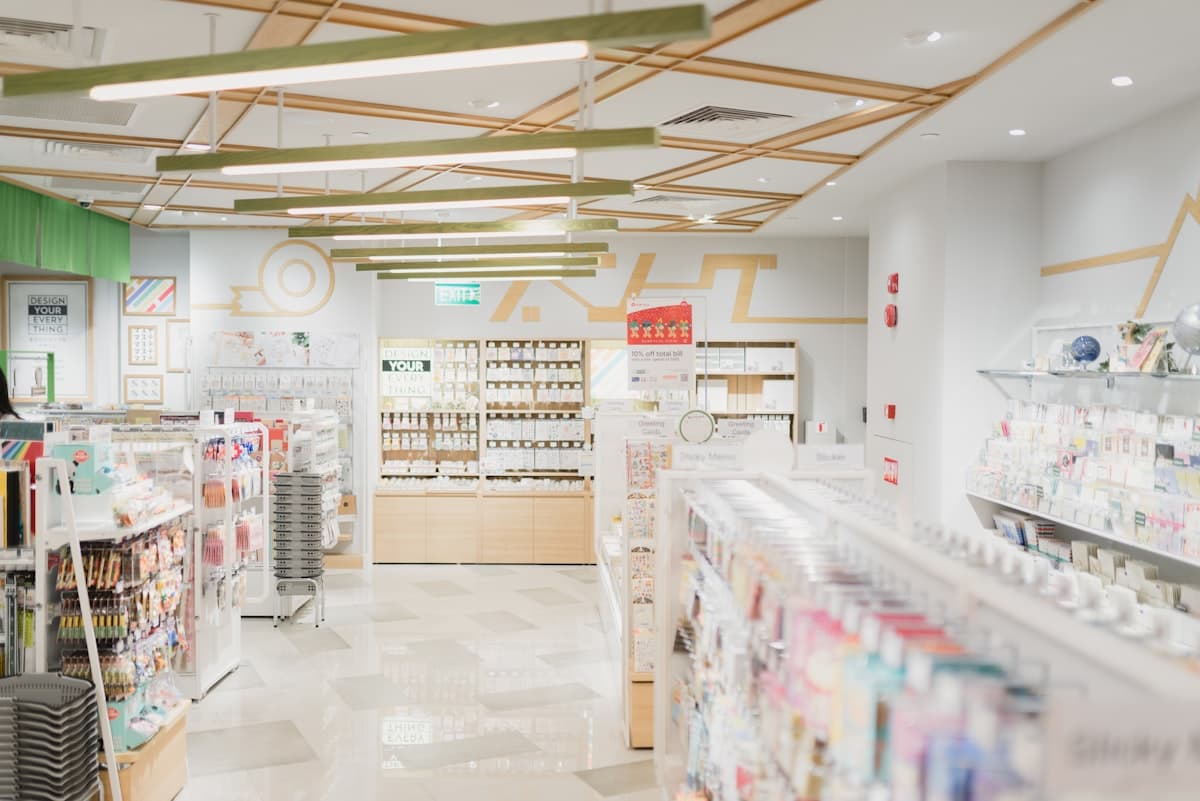
Chemist Warehouse is Australia's largest pharmacy retailer, with a store network heading past 550 sites. Like every high-volume retailer, it lives and dies by whether the product a shopper wants is on the shelf when they reach for it. That single condition, on-shelf availability, is one of the oldest and least glamorous problems in retail.
It is also one of the most expensive. Decades of retail research have put average out-of-stock rates around 8%, which means roughly one in twelve items a customer looks for is missing from the shelf at any given moment. Every gap is a lost sale, a substitution to a competitor, or a shopper who walks out with less than they came for. In a pharmacy doing high footfall across hundreds of stores, small percentages become large numbers fast.
The usual fixes are all imperfect. Manual shelf audits are slow, infrequent, and out of date the moment they finish. Fixed ceiling cameras are expensive to install and only see part of the store. Inventory robots that roam the aisles cost a fortune and get in the way of customers. Most retailers know their shelves are wrong. Very few know exactly which shelves, in which stores, at which time of day. Without that, replenishment is guesswork.
In mid-2024, Chemist Warehouse started a pilot with Augmodo, a Seattle spatial-computing startup, to find out what was actually happening on its shelves and act on it.
What they built
The SmartBadge
Augmodo makes a wearable device called the SmartBadge. A store associate clips it to a lanyard and wears it while doing their normal job. As they walk the floor, a small camera and computer-vision system scan the shelves automatically, hundreds of times a day, with no action required from the person wearing it.
The founder's background explains the approach. Ross Finman ran the headset division at Niantic, the company behind Pokémon Go, where his job was building spatial maps of the physical world down to the centimetre using data from tens of millions of players. Augmodo applies the same spatial-computing idea to the inside of a store. The badges build a live 3D map of the shop floor and update the planogram, the model of what should sit where, dozens of times a day.
The spatial AI assistant
The scanning is only half of it. The system reads what it sees and turns it into instructions. It tells the associate what is out of stock, what has been misplaced, and what to do next. As Finman describes it, staff "wear the SmartBadge on a lanyard or clip, and everything is automatically scanned as they walk the floor, providing us with real-time inventory data. The assistant tells them what's out of stock and what needs to be done next."
This is the part that makes it an assistant rather than a monitoring tool. The AI does not replace the associate. It hands them a prioritised list of shelf problems that would otherwise be invisible until a customer complained or a manual audit caught them weeks later.
The economics of a badge
Augmodo's pitch against the alternatives is about cost and simplicity. Compared with inventory robots and fixed camera systems, the company says the SmartBadge collects ten times more data, costs a hundred times less, and installs in under 20 minutes. Data collection is fully passive, which means associates change nothing about how they work.
SpatialView
The shelf data does not stay inside the stores. Augmodo and Chemist Warehouse launched a program called SpatialView, which gives Chemist Warehouse's suppliers access to real-time shelf data for their own products. The exhaust from fixing the shelves becomes a second product in its own right, sold back into the supplier relationship.
The results
The early numbers from the pilot are strong.
| Metric | Detail | Source |
|---|---|---|
| Inventory gaps | 30% decline in the first month of operations | Augmodo / GeekWire (2025) |
| On-shelf availability | Up to 30% improvement from the passive scanning approach | World Retail Congress (2025) |
| Pilot to rollout | 4 pilot stores in mid-2024, expanding toward 550+ stores over two years | Chemist Warehouse / Augmodo (2025) |
| Install time | Hardware set up in under 20 minutes per store | Augmodo (2025) |
| Data frequency | Shelves scanned hundreds of times a day, planograms updated dozens of times a day | Augmodo (2025) |
| Cost vs robots | Claims 10x more data at 100x lower cost than robotic or fixed-camera systems | Augmodo (2025) |
The commercial signal followed the operational one. Augmodo raised a 5.3 million dollar seed round in late 2024 and a 37.5 million dollar Series A in mid-2025, on the back of the Chemist Warehouse deployment moving from four pilot stores to a full-chain rollout in a matter of months.
A note on the figures: the 30% numbers come from Augmodo and its partner announcements, not from an independent audit. They describe the early pilot period, and "up to 30%" is a ceiling, not an average across every store.
What makes this case interesting
The AI is invisible to the person using it. Nobody at Chemist Warehouse had to learn a new system, stop to scan a shelf, or become a data analyst. They clip on a badge and do the job they already do. This is the same lesson that shows up in every successful operational AI deployment: tools that add friction during a busy shift get ignored, and tools that observe quietly get used. The badge works because it asks nothing of the wearer.
It augments the associate instead of replacing them. The obvious way to read shelves at scale is a robot. Augmodo chose to put the intelligence on a person who is already walking the aisles. The associate is not competing with the machine, they are carrying it. The AI turns a routine floor walk into a continuous audit and hands the human a prioritised task list. The headcount does not fall. The work gets sharper.
The humble tool beat the impressive one. A wearable badge is far less impressive than a roaming robot or a ceiling grid of cameras. It is also cheaper, faster to install, and collects more data because it goes wherever staff go. The most effective answer to the shelf problem was the least visible piece of hardware, not the most advanced one. In retail operations, the tool that produces the data at the lowest cost usually wins, regardless of how it looks in a press photo.
The data became a second product. SpatialView turns shelf conditions into an asset Chemist Warehouse can offer its suppliers. A system bought to fix an internal operational problem now feeds an external commercial relationship. The value created by fixing the shelves is partly captured back through the supplier program, which changes the return profile of the whole investment.
The challenges
The results are early and vendor-reported. The 30% figures come from the companies involved, cover the initial pilot, and have not been independently verified. Pilot performance in four selected stores is not the same as sustained performance across 550. The honest position is that the direction is promising and the full-scale numbers are not yet proven.
Seeing the gap is not the same as filling it. The badge finds the empty shelf. A human still has to restock it. On-shelf availability only improves if associates act on the prompts consistently, which depends on staffing levels, stockroom inventory, and whether the store is busy. The technology removes the blindness, not the workload.
Attribution is hard. On-shelf availability is affected by supply chain reliability, promotional spikes, and seasonal demand as much as by shelf visibility. Isolating how much of the 30% improvement is down to the badge, versus everything else happening in the business, is genuinely difficult.
Wearable cameras raise a workforce question. A camera worn by staff on the shop floor is a sensitive thing. It needs clear boundaries on what is recorded, who sees it, and whether it is ever used to assess the individual rather than the shelf. Handled badly, a shelf-scanning tool becomes a surveillance story, and the adoption advantage disappears.
Lessons for your programme
Pick the unglamorous, measurable problem first. On-shelf availability is not a headline-grabbing use case. It is a specific, quantifiable operational gap with a direct line to revenue. That is exactly what makes it a good place to start. Breaking a role down to the tasks where AI removes a blind spot is the discipline behind good opportunity selection. The in Section 4: Opportunity Identification helps you find the tasks worth targeting.
Design for effortless adoption. The SmartBadge succeeded because it demanded nothing from the person wearing it. If your AI tool requires behaviour change during a high-pressure shift, it will lose to the pressures of the shift. Build for the operational reality your people work in, not the one in the demo. Section 11: Change Management, Scaling, and Adoption covers how to design for adoption rather than resistance.
Choose the cheapest tool that produces the data. Chemist Warehouse did not need the most advanced hardware, it needed the shelf data at a cost and install speed that let it scale to hundreds of stores. That is a build, buy, or configure decision, and the right answer is rarely the most expensive one. The in Section 5: The Tooling Landscape gives you a framework for making that call on evidence rather than on which vendor demos best.
Ask who captures the value the AI creates. Fixing the shelves creates value. The SpatialView supplier program is Chemist Warehouse making sure it captures some of that value rather than leaking all of it. Before you invest, work out who gets more valuable if the AI works, and design to keep more of the upside. The in Section 4: Opportunity Identification is built to surface exactly that question before the money is spent.
Sources
- Chemist Warehouse Launches Partnership with Augmodo, Modernizing Tech to Give Store Associates Spatial AI Assistants (Business Wire, 2025)
- Fresh off $37.5M round, Augmodo's vision for spatial computing inside retail stores sharpens (GeekWire, 2025)
- Former Niantic leader's spatial computing startup aims to help retailers track shelf inventory (GeekWire, 2024)
- Augmodo snags Chemist Warehouse partnership, hires Simon Morriss as Commercial Director for APAC (Retail Technology Innovation Hub, 2025)
- Augmodo Raises $37.5M to Modernize and Grow Spatial AI Tech (Business Wire, 2025)
- Five of the Best: AI Case Studies Transforming Retail in 2025 (World Retail Congress, 2025)
- Australian Pharmacy Pilots Wearable Inventory and Task-Tracker Solution (Retail TouchPoints, 2024)